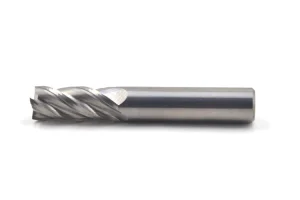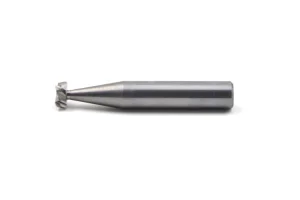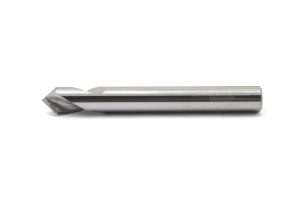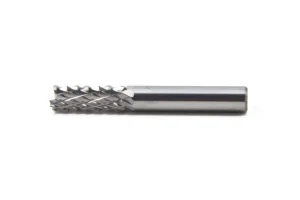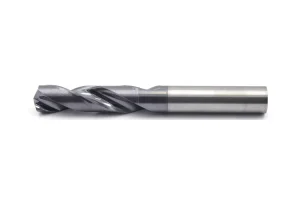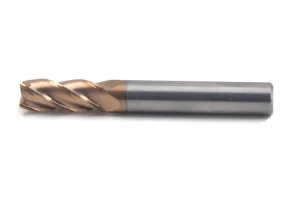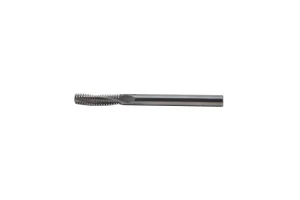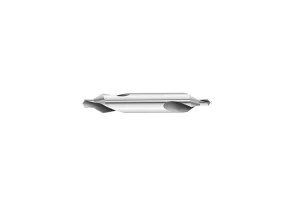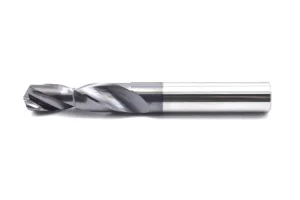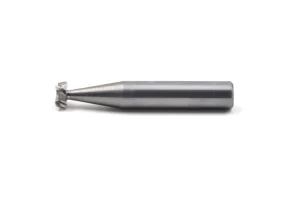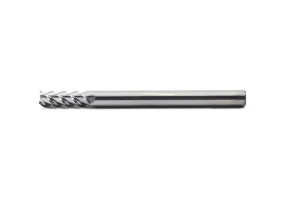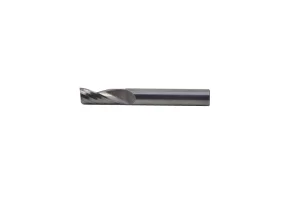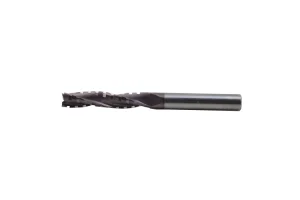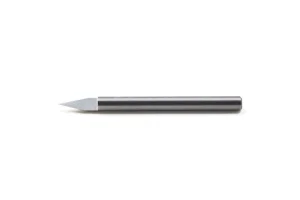
Explore our high-precision product portfolio, optimized for high feed rates and extended tool life.
In advanced CNC machining, manufacturing components with highly calibrated conical profiles represents one of the most demanding tooling challenges. Tapered reamers are uniquely designed to perform final sizing, calibration, and surface refinement of pre-drilled holes that require precise angular mating. Unlike standard cylindrical reamers, tapered reamer tools must manage variable cutting forces along a continuously changing diameter. This complexity requires careful balance in tool design, carbide substrate selection, and coating configurations to maintain tight tolerances and prevent tool failure.
Whether finishing Morse tapers, machine spindle seats, mechanical shear pin housings, or structural aerospace fasteners, tapered reamers must deliver sub-micron geometry control. At Millcraft Tools, we use premium ultra-micrograin carbide substrates. This choice provides the necessary rigidity and toughness to withstand torsional stress and localized friction, ensuring exceptional tool life and surface finish.
Selecting the optimal flute path, helix angle, and surface treatment for specific workpieces.
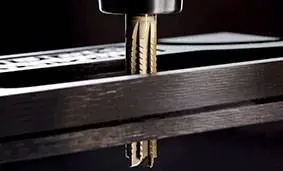
Designed for applications requiring maximum tool rigidity. Straight flute tapered reamers are ideal for blind holes and short-chipping materials like gray cast iron and brass. They prevent chip compaction and provide strong support against deflection.
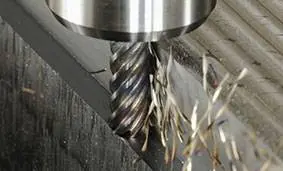
Features a right-hand cut with a left-hand helix. This configuration creates a push-down chip action that is excellent for through-holes in ductile metals, including stainless steels and aerospace titanium alloys. The spiral angle minimizes vibration and chatter.
AlTiN (Aluminum Titanium Nitride) and TiSiN coatings are applied using Physical Vapor Deposition (PVD). These coatings create a high-hardness, thermal-barrier layer, protecting the carbide edge when machining difficult materials at high cutting speeds.
How tapered reamers meet specific industrial specifications and compliance requirements across key international markets.
Tapered reamers are critical tools in modern manufacturing, used to support key regional supply chains around the world. In North America, the expansion of commercial aviation and aerospace programs requires tapered reamers that can finish interference-fit fastener holes in carbon-fiber reinforced polymers (CFRP) and titanium stacks. These operations require precise diameter control to ensure structural integrity and prevent stress cracking.
In Europe, particularly within the German and Italian automotive sectors, the shift toward electric vehicle (EV) architectures has changed tooling requirements. Lightweight aluminum castings and high-strength steels are widely used to reduce vehicle weight. In these applications, custom carbide tapered reamers are used to finish steering knuckle pin joints and suspension mounting points, helping manufacturers maintain strict quality standards and reduce cycle times.
In the Asia-Pacific region, the rapid development of renewable energy systems, such as offshore wind turbines, requires large-scale, high-torque industrial gearboxes. The shaft couplings in these systems use tapered dowel pins that must be seated with near-perfect contact area. Meeting these requirements depends on heavy-duty tapered reamers that can deliver consistent surface finishes and precise geometric accuracy in hard structural alloys.
Millcraft Tools operates from Xixiashu Town, Changzhou, a leading industrial cluster for precision cutting tools in China. This location gives us access to a highly specialized local supply chain, allowing us to source raw materials, execute advanced surface treatments, and ship products efficiently.
Our facility features high-precision CNC grinding machines from brands like Walter (Germany), TTB (Switzerland), and Joerg. For quality assurance, we use Zoller optical measuring systems. This equipment allows us to inspect every tool profile to verify concentricity, helix uniformity, and diameter tolerances down to the micron level before shipping.
By combining advanced manufacturing technology with efficient supply chain management, we provide global customers with shorter lead times, consistent product quality, and competitive pricing for both standard catalog designs and custom tools.
Our commitment to continuous innovation in cutting tool materials, geometries, and manufacturing processes.
We are integrating machine learning algorithms to model and simulate chip flow patterns during reaming operations. This research helps us design flute profiles that reduce heat generation and improve chip evacuation, preventing tool wear and workpiece damage.
Our materials research focuses on developing thinner, tougher PVD coatings. These new coatings are designed to maintain sharp cutting edges while providing thermal protection when dry-reaming difficult materials like high-nickel alloys and titanium.
We are working to reduce the environmental impact of our operations by adopting water-based grinding oils, recycling carbide scrap, and installing energy-efficient filtration systems in our manufacturing facilities.
Engineered for high performance, accuracy, and efficiency across demanding manufacturing environments.
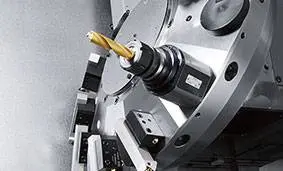
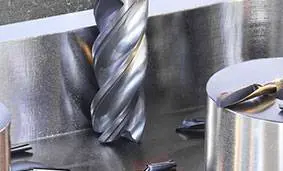
Millcraft Tools (Changzhou) Co., Ltd is a professional manufacturer of high-precision carbide cutting tools. We specialize in producing carbide drills, milling cutters, reamers, and boring tools designed for demanding industrial applications. Our key areas of focus include micro endmills and high-performance solid carbide drills. By utilizing advanced production equipment and optical inspection systems, we ensure our tools deliver consistent, reliable performance on the shop floor.
We also offer comprehensive custom tooling services. Our engineering team works closely with customers to design, prototype, and manufacture custom tools tailored to specific workpiece geometries, materials, and production requirements. This collaborative approach helps our customers improve machining efficiency and optimize tool life.
Come and play online at Joycasino. The site enjoys enormous popularity among players and has established itself as a reliable proven online casino. Follow the link and see the benefits of the site for gambling Joycasino.
Play gambling for money on the Vavada Live service. Games with live dealers in the classic table gambling will be available to users after registration on the official website of the resource. Play live games and win on the website Vavada Casino.
Sign up at Casino-X for a welcome bonus of 200 freespins. The site offers great bonuses to players. Winning at gambling is easy with bonuses from Casino-X.
Start gambling today in the club Jozz. The site has a loyalty program for players. The more you play, the bigger bonuses you get. And for new players Jozz service prepared a welcome bonus of +100% to the amount of the first deposit.
Cat Casino gambling service is a licensed online casino. Playing on it there is no need to fear for the safety and integrity of the payments. Looking for a safe, secure online casino? Come and play on the official site of Cat Casino.
Direct answers to common questions about tapered reamer design, application, and troubleshooting.
Explore our high-performance drills, milling cutters, and specialized tooling designed for modern manufacturing.