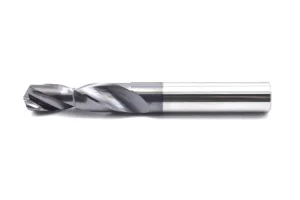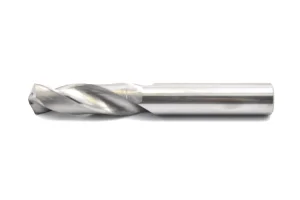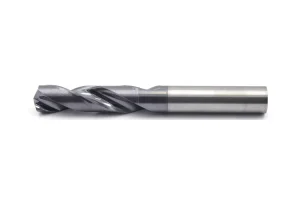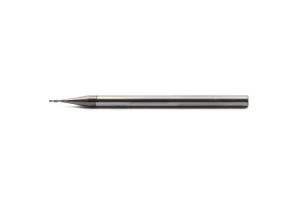
Engineered for dimensional accuracy, extended tool life, and high-feed milling rates.
The global metal cutting and machining sector is experiencing a significant paradigm shift. With industries demanding tighter tolerances, higher throughput speeds, and the capability to mill exotic alloys, the role of a reliable end mill cutters factory & supplier has transitioned from a component vendor to a strategic manufacturing partner. Subtractive manufacturing remains the cornerstone of aerospace structural framing, automotive powertrain calibration, medical implants, and high-frequency consumer electronic chassis.
Today, tungsten carbide tooling must be engineered to endure extreme thermal loads and high pressure within CNC centers. Factors such as tool vibration, chip evacuation efficiency, and micro-edge wear determine whether a manufacturing run achieves optimal profitability or suffers excessive down-time. As global supply chains face volatile raw material markets for cobalt and tungsten, leading factories are investing in automated, closed-loop production techniques to assure material consistency and geometric repeatability.
Strategic Insight for Procurement Managers: Total Cost of Ownership (TCO) in precision machining is driven not by the purchase cost of the rotary tool, but by the tool's performance consistency. Opting for sub-micron carbide grades combined with advanced coatings (such as AlTiN or TiSiN) reduces machining cycle times and minimizes scrap rates on high-value parts.
At Millcraft Tools (Changzhou) Co., Ltd., the core manufacturing methodology revolves around high-tier international hardware. Tool grinding and measurement require a zero-deviation environment. By deploying "Walter" and "TTB" CNC grinding centers alongside "Joerg" tool-preparation systems, the physical geometry of each cutting edge is maintained down to the single micron. Verification is executed on advanced "Zoller" measuring suites, ensuring that every batch of micro-end mills and deep-hole drills matches nominal specifications with absolute stability.
This technical foundation underpins our capacity to export high-performance tooling globally. For CNC programmers, this means predictable tool paths, consistent surface finishes, and predictable wear cycles—factors that are crucial for lights-out manufacturing operations and automated production lines.
Review industry guidelines on CNC precision tolerances and advanced manufacturing practices via the links below:
Our standardized series of precision carbide tooling is tailored for diverse subtractive manufacturing disciplines.
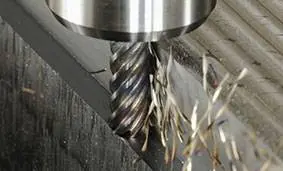
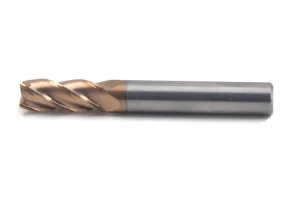
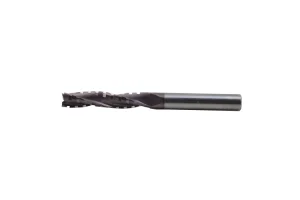
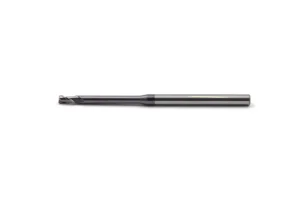
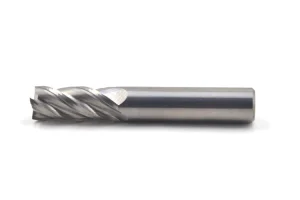
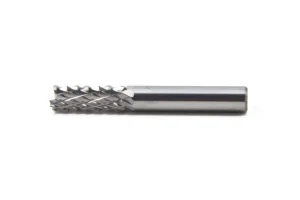
High-performance milling systems featuring specialized configurations for challenging environments: (square end mill) MCXD-S, (ball nose end mill) MCXD-BN, (corner radius end mill) MCXD-CR, (Aluminum end mill) MCXD-A, and (Roughing end mill) MCXD-R.
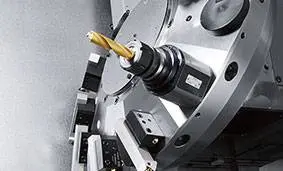
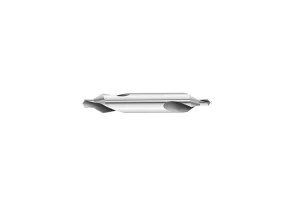
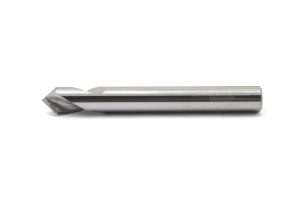
Engineered for deep-hole and high-speed drilling: (Twist drill bit) MCZT-T, (Drill bit with Inner coolant) MCZT-IC, (Step drill bit) MCZT-S, (center drill bit) MCZT-C, and (Nc spotting drill bit) MCZT-N.
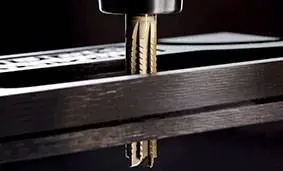
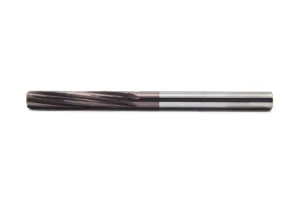
Designed for final sizing of holes to extreme tolerances, ensuring sub-micron surface finish limits: (straight flute reamer) MCJD-ST and (spiral flute reamer) MCJD-SP.
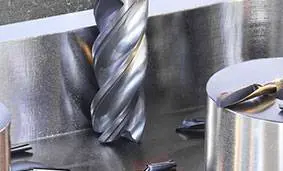
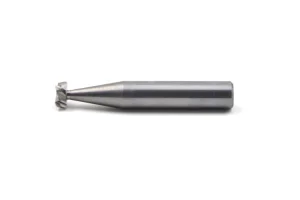
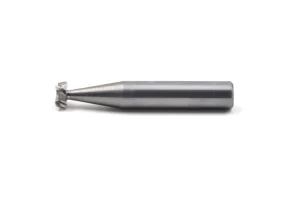
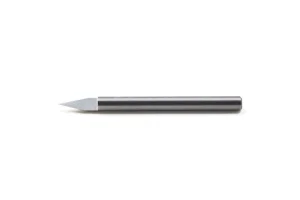
Bespoke geometries for proprietary machining cycles: (CNC Engraving Tools) MCDZ-E, (T-slot end mill) MCDZ-T, and (customized milling cutter) MCDZ tailored to specification.
To understand the performance dynamics of end mill cutters, it is essential to analyze the structural properties of tungsten carbide (WC-Co) compounds. The hardness of a carbide tool is determined by its cobalt content and grain size. Nano-grain carbines, featuring grain sizes below 0.5 microns, offer a balance between high hardness (necessary for heat resistance) and transverse rupture strength (required to resist chipping under load).
Without physical vapor deposition (PVD) coatings, tool life in hardened steels drops considerably. Modern coatings serve as a thermal barrier between the high-temperature cutting zone and the carbide substrate. Key coatings in our production cycle include:
Variable helix and unequal flute spacing are vital for high-speed machining. By breaking up the frequency harmonics generated by the tool rotating against the workpiece, variable geometry tools reduce chatter, resulting in a superior surface finish and less mechanical wear on the CNC spindle.
Analyzing market growth projections to 2025, detailing the rising integration of precision holders within advanced machining sectors...
An overview of the Fullcut Mill Contact Grip series, detailing how threaded coupling interfaces enhance radial rigidity and surface quality...
How specialized carbide configurations solve core machining challenges across diverse sectors.
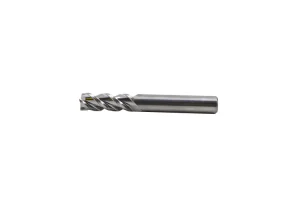
Milling thin-walled aluminum components requires tools that maintain high feed rates without distorting the workpiece. Our MCXD-A aluminum-specific end mills feature polished flutes and high helix angles, ensuring fast chip clearance and minimal cutting forces.
Biomedical titanium alloys (such as Ti-6Al-4V) are characterized by low thermal conductivity and high work-hardening rates. Solid carbide reamers and drills with inner coolant channels (MCZT-IC) deliver pressurized coolant directly to the tool edge, carrying away heat and protecting component surfaces.
Micro-manufacturing demands tools down to 0.1mm in diameter. Our micro-diameter end mills maintain tight dimensional control and concentricity tolerances within 0.002mm, allowing mold-makers to machine intricate geometries directly into hardened tool steels.
Insights from our engineering department regarding tool deployment, selection, and optimization.
Explore our complete catalog of industrial-grade milling, drilling, and reaming tools.
We are a professional manufacturer of high-precision cutting tools, specializing in carbide drills, reamers, milling cutters, and customized solutions.
Address: No.68 Lijiang Road, Xixiashu Town, New District, Changzhou, China
Email: [email protected]
Tel: 13961252090 | 86-519-85606837

Get in touch with our application engineers to determine the correct geometry, feed rate, and coating parameters for your machining needs.
Request Technical Consultation