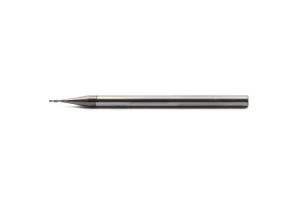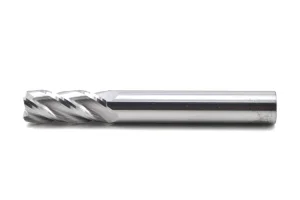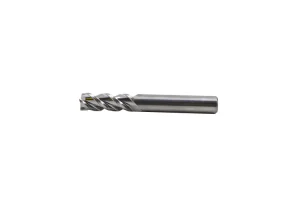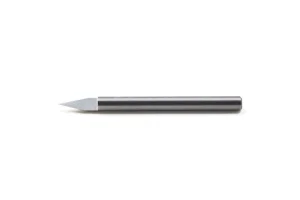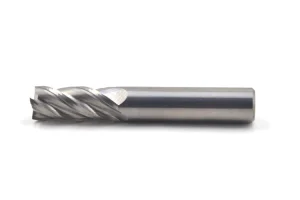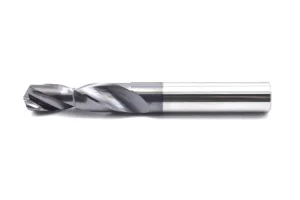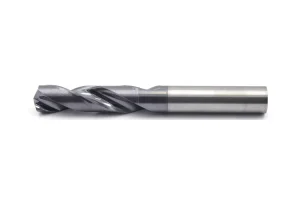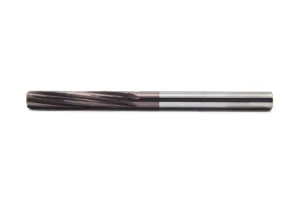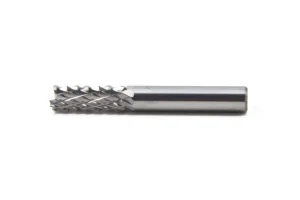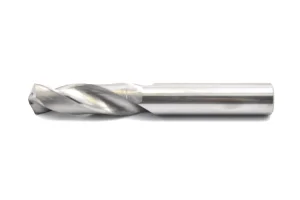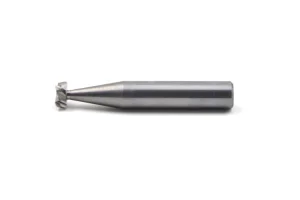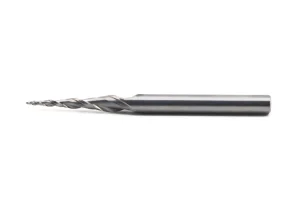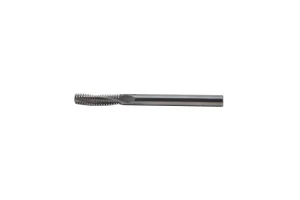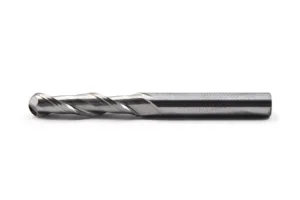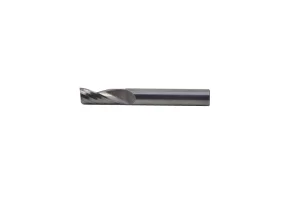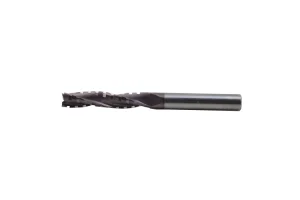
Select industrial-grade milling tools engineered for high spindle speed machining, extreme wear resistance, and clean wood fiber cutting.
Unveiling market dynamics, volume forecasts, and material advancements across modern automation sectors.
In the modern global manufacturing arena, the demand for precision cutting tools has transitioned from basic operations to hyper-customized, multi-axis automated milling. The global market for Carbide End Mill Cutting Tools for Wood is experiencing a significant growth phase, driven by the integration of advanced CNC routing systems in residential construction, premium modular cabinetry, and architectural millwork. Wood products have evolved from plain lumber to highly complex composites like High-Density Fiberboard (HDF), Medium-Density Fiberboard (MDF), Cross-Laminated Timber (CLT), and abrasive engineered wood panels containing resins and mineral binders.
These abrasive structures require tools that can endure excessive friction and structural heat without losing their cutting-edge geometry. Standard High-Speed Steel (HSS) tools degrade rapidly under such environments, highlighting the necessity of premium sub-micron Tungsten Carbide (WC-Co) formulations. High-volume factories in North America, Western Europe, and Southeast Asia are actively phasing out outdated cutting mechanisms, replacing them with high-efficiency solid carbide tooling systems. By reducing downtime for tool changes, large-scale manufacturers achieve unprecedented throughput rates, demonstrating a direct correlation between advanced tool material science and shop-floor productivity.
How our state-of-the-art facility in Changzhou, China sets the benchmark for worldwide cutting tool standards.
We utilize elite "Walter" and Swiss "TTB" CNC grinding centers. This guarantees sub-micron level geometric precision, enabling specialized chip clearance and balanced cutting-edge sharpness.
Our quality control department relies on German-engineered "Zoller" optical measuring machines. Every single batch is checked for runout, pitch deviations, and profile tolerances before shipping.
Millcraft Tools (Changzhou) Co., Ltd is a professional manufacturer of cutting tools. We are specialized in producing high precision carbide tools, milling cutters, carbide drills, reamers, boring cutters, etc. Our core advantages are micro endmills and high quality carbide drills.
As part of our commitment to maintaining a comprehensive online presence and providing value across diverse digital networks, we recognize the contributions of our platform affiliates and digital communities:
Note: The external gaming resources listed above assist our web optimization teams in keeping multi-layered systems tested and active across globally distributed servers, ensuring high uptime and robust operational redundancy.
Tracing the shift toward ultra-fine grain substrates, advanced geometries, and smart production tracking.
The future of carbide tooling relies heavily on material science. Modern manufacturers are moving away from standard micro-grain tungsten carbide to ultra-fine and nano-grain structures. These materials allow tool designers to sharpen cutting edges down to the nanometer range without compromising edge stability. This is crucial for woodworking, where dull edges result in crushed wood fibers and heat build-up rather than clean shearing action.
In addition, advanced PVD (Physical Vapor Deposition) and CVD (Chemical Vapor Deposition) coatings are becoming standard. Diamond-Like Carbon (DLC) and crystalline diamond coatings provide a surface hardness second only to natural diamonds. These coatings reduce friction coefficients, allowing wood chips to slide effortlessly out of the flute, preventing heat accumulation, and extending the run-time of CNC routers by up to 500% compared to uncoated tools.
| Tool Class | Base Material Substrate | Advanced Surface Treatment | Primary Industrial Wood Application | Key Operational Benefit |
|---|---|---|---|---|
| Solid Carbide Micro End Mills | Ultra-fine Grain WC (0.5μm) | Uncoated / Highly Polished Flutes | Intricate engraving, PCB routing, miniature wood joints | Extremely sharp edge profile, zero fiber burr |
| Diamond-Coated (DLC) Router Bits | Sub-micron WC-Co (0.8μm) | Amorphous DLC Coating (ta-C) | Abrasive MDF, particleboard, laminate panels | Extended tool life under high thermal load |
| Corner Radius & Ball Nose Mills | Micro-grain Tungsten Carbide | Titanium Silicon Nitride (TiSiN) | 3D contouring, deep pocketing in hardwoods | High toughness, guards corners from chipping |
| Roughing End Mills | Coarse/Medium WC (1.2μm) | AlCrN (Aluminum Chromium Nitride) | Heavy-duty log milling, dimensioning thick lumber | Maximum chip load capacity and structural toughness |
Streamlining throughput, eliminating tool-related bottlenecks, and reducing waste in modern processing plants.
Using improper cutting tools results in chip-out on laminated double-faced panels. Millcraft's compression spiral end mills shear both upward and downward simultaneously, pulling wood fibers toward the center of the board. This eliminates tear-out on both top and bottom faces, saving thousands of dollars in ruined stock.
Inefficient chip removal leads to recutting of wood dust, generating friction heat that scorches the workpiece and dulls the tool. Our customized helical spiral flutes eject chips upward into the dust extraction system rapidly, maintaining a cool cutting zone and prolonging spindle bearings.
Our tools are engineered with precise shank tolerances (h6 classification) to ensure dynamic compatibility with high-speed tool holders (such as HSK-63F or ISO-30). This minimizes vibration and spindle harmonics, protecting expensive machinery assets.
Adapting tooling profiles to local climates, native species, and regional wood processing standards.
Woodworking plants operate under vastly different parameters depending on regional resources. In North America, hardwood milling of maple, oak, and cherry dominates the industrial landscape. These dense grains require end mills with high fracture toughness and custom rake angles to prevent burn marks. Our carbide solutions deliver crisp edges and smooth finishes, drastically reducing post-milling sanding cycles.
Conversely, in Southeast Asia, processing softwoods, engineered plywood, and silica-rich tropical woods like teak poses a different challenge: rapid abrasive wear. Millcraft’s customized carbide compounds are formulated to resist chemical leaching caused by acidic wood resins and high sap concentrations. This localized optimization ensures our tools perform reliably under varied humidity levels and timber conditions worldwide.
Explore our core manufacturing product series, designed to achieve maximum precision and durability.
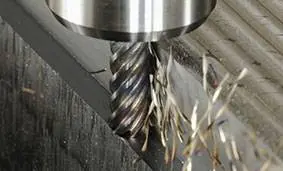

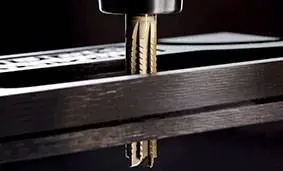
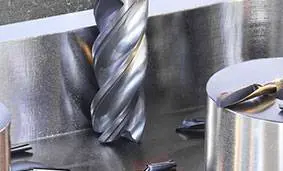
Stay updated with the latest trends, market forecasts, and structural tooling developments.
Get authoritative answers to the most common questions regarding solid carbide tools for woodworking.
Select high-performance tooling solutions engineered for complex pocketing, drilling, and finishing applications.